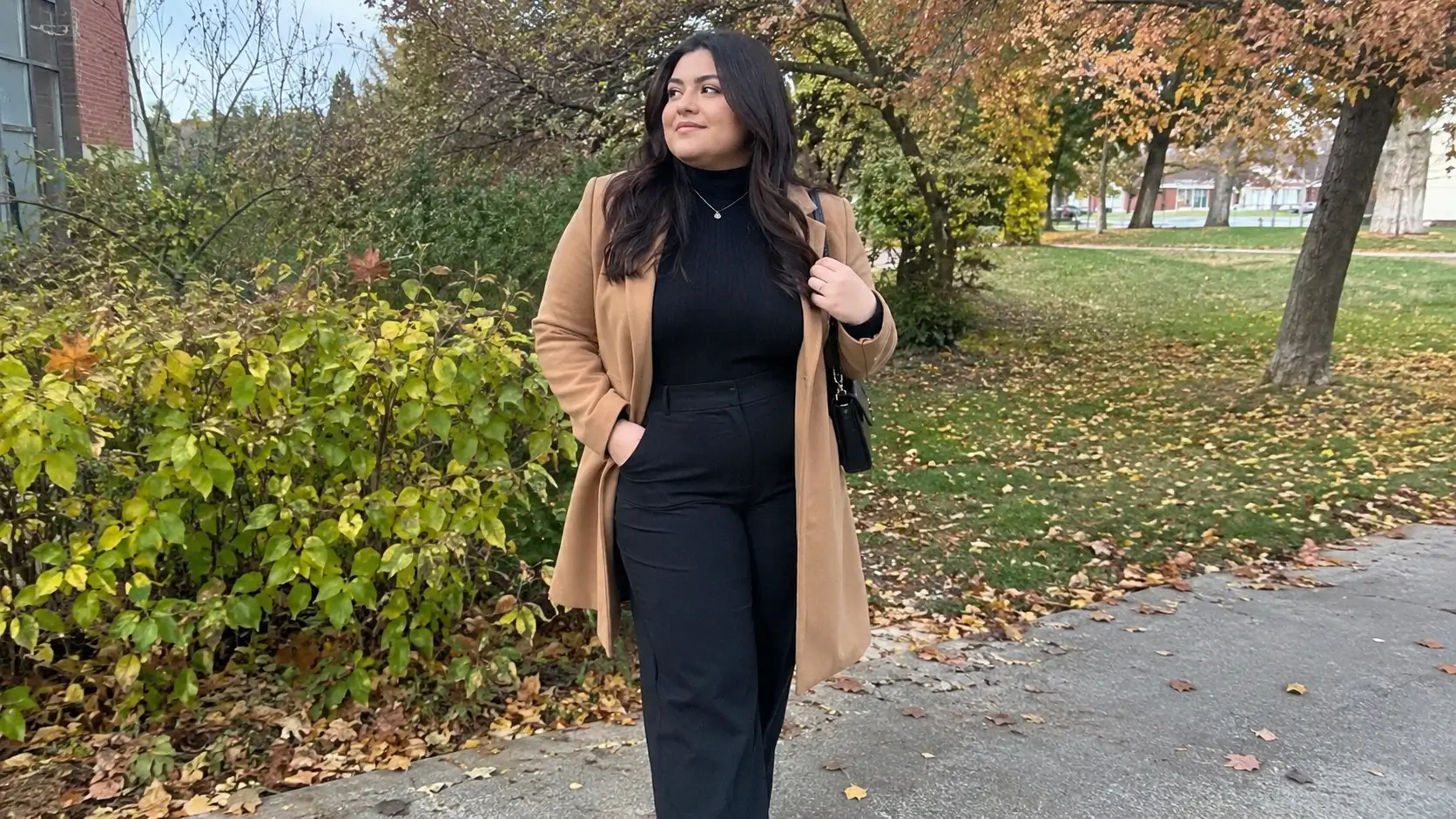
A pear shape carries more width through the hips and thighs than through the shoulders and bust, and most fall pieces aren’t built with that difference in mind. Straight-leg jeans get sold as universal. Boxy cardigans get sold as easy. Neither one accounts for where your fall wardrobe actually needs to work harder.
The fix isn’t hiding the hips — it’s giving the upper body enough visual weight to balance them out, then choosing bottoms with clean, quiet lines instead of tapered ones that grip. Structure on top, ease on the bottom, and a waistline that gets marked instead of buried.
These 21 outfits build on that idea through every kind of fall piece: sweaters, jackets, dresses, denim, and the accessories that finish a look off. Pick the ones that match your closet and your climate, and adjust the layers as the temperature drops.
Necklines and Shoulders That Pull the Eye Up
The upper body is where a pear shape has room to play, and a strong neckline or sleeve does more work than any accessory. Start here before you touch a single bottom.
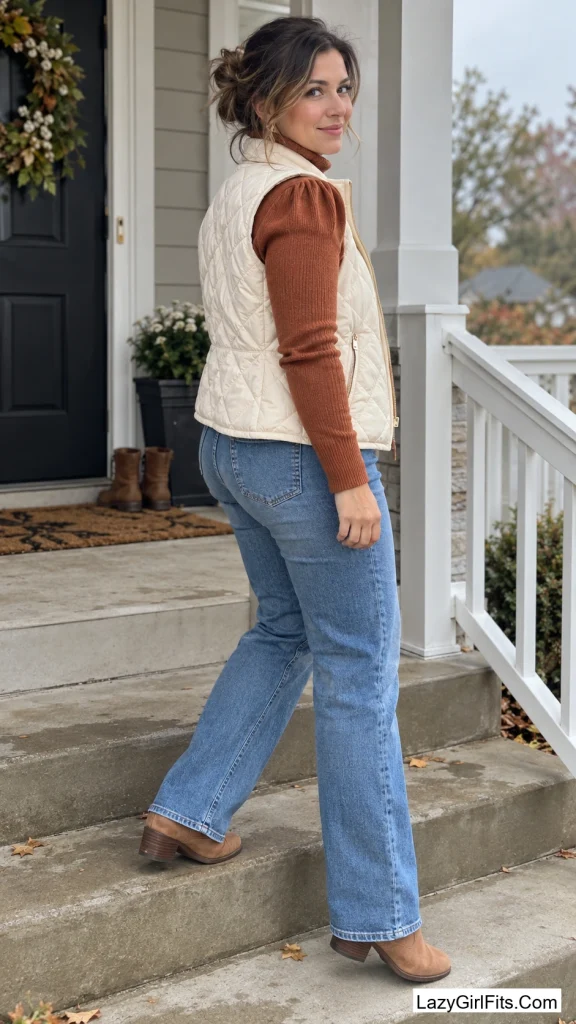
1. Puff-Sleeve Turtleneck Layered Under a Cropped Vest
A fitted turtleneck with a puff sleeve gives the shoulder a soft edge before anything else goes on top, and a cropped vest — quilted or knit, cut to hit right at the ribs — adds another layer of width without covering the waist. Keep the vest open, or clasp just the top button, so the shape underneath still reads.
The combination works because it stacks two kinds of volume in one place instead of spreading them out. A darker turtleneck under a lighter vest, or the reverse, adds enough contrast that the eye lands on the top half and stays there before it gets to the hips.
2. Square-Neck Sweater with a Statement Collar Necklace
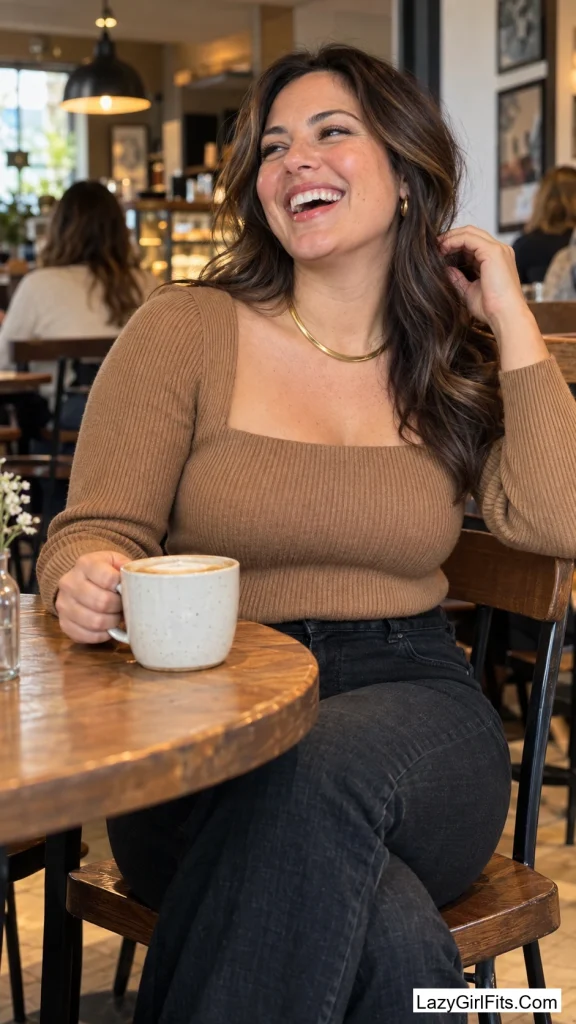
A square neckline sits wider than a crew or v-neck, and it gives a collar necklace — the kind that sits flat against the collarbone rather than dangling — somewhere to rest. Look for a sweater in a mid-weight knit so the square shape holds instead of stretching into a rounder line by midday.
The necklace does the real work here. A row of small stones or a chunky chain across the collarbone reads as a horizontal line right where a pear shape wants one, and it costs nothing in extra fabric or bulk.
If the sweater runs long, tuck the front half into a high-waisted bottom so the square neckline doesn’t get lost under extra length. A half-tuck keeps the waistline visible without a full cinch.
3. Batwing Sleeve Sweater with a Single Statement Cuff
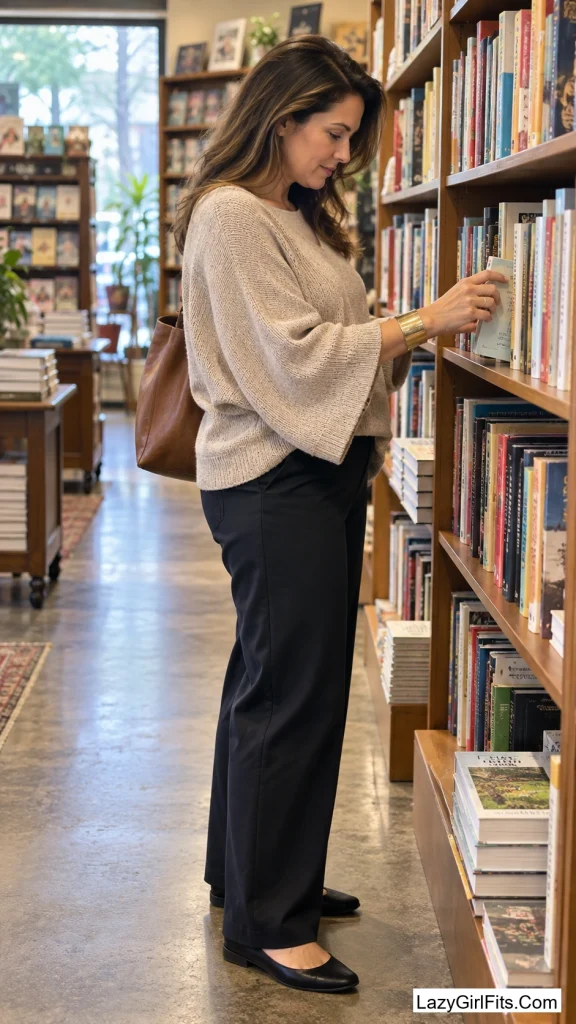
A batwing sleeve tapers from a wide shoulder down to a fitted wrist, which means the width sits exactly where a pear shape benefits from it — high, near the shoulder — rather than adding bulk at the hip. One cuff, not two, keeps the accessory from competing with the sleeve’s own shape.
Pair it with a bottom that has zero detail at the hip: no back pockets, no side seams, no pattern. The sweater is already carrying the outfit’s visual interest, and a plain bottom lets it.
Bottoms That Skim Instead of Cling
A pear-shape bottom half isn’t about hiding — it’s about choosing a cut that moves with the leg instead of pulling tight across it. Clean lines and a straight or gently flared leg do more than a dark wash alone.
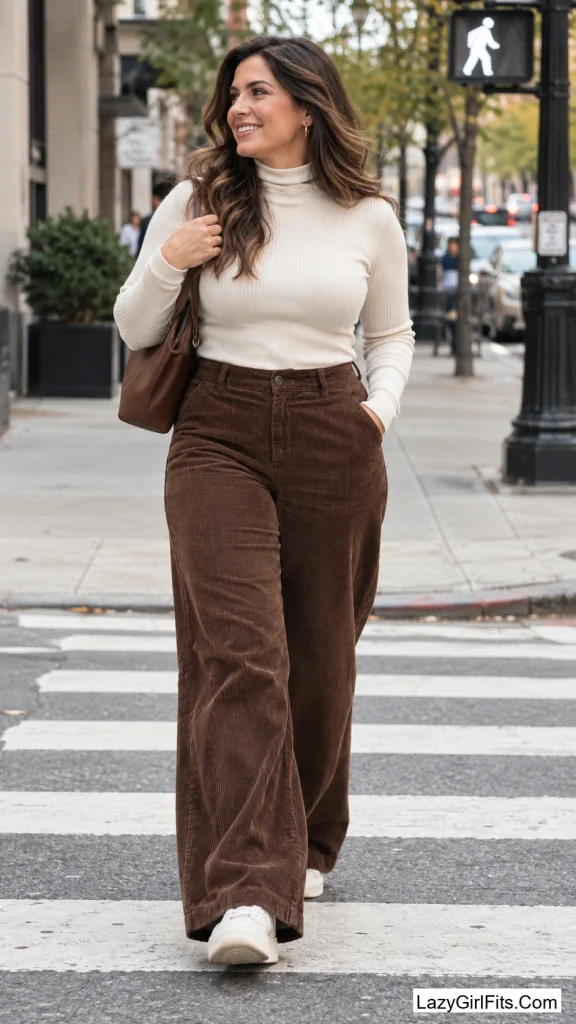
4. Wide-Leg Corduroy Trousers in Chocolate Brown
Corduroy has enough structure to hold a wide leg shape through a full day without collapsing into shapelessness, and a rich brown reads as a fall neutral rather than a statement color. High-waisted styles keep the waistline visible above the flare.
The wale of the corduroy adds a subtle vertical texture down the leg, which is a quieter way to lengthen the line than a seam or stripe would be. Pair it with a fitted top so the volume stays in one place instead of two.
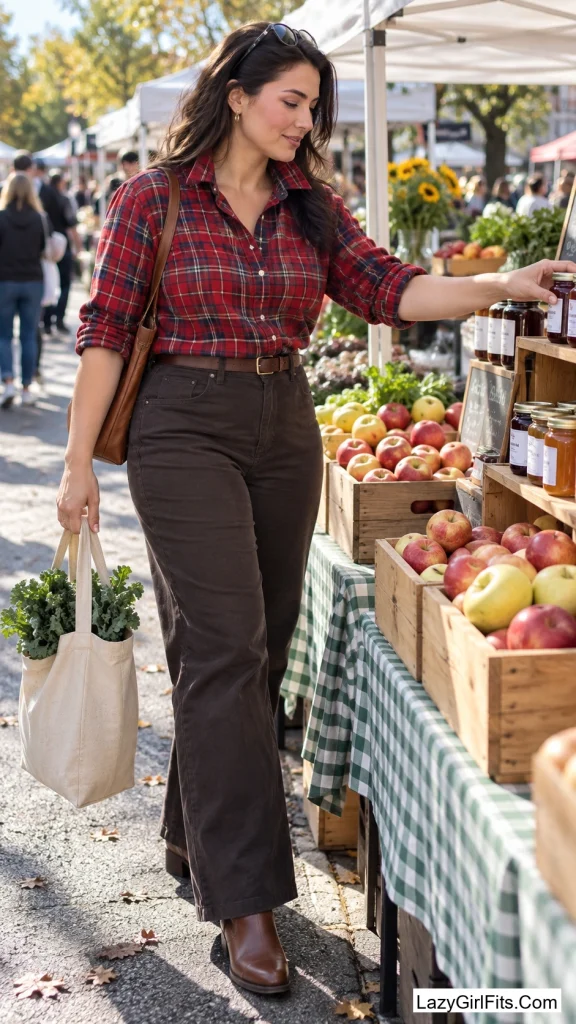
5. Straight-Leg Trousers with a Tucked Flannel
A straight-leg trouser in a dark wash or solid color skims the thigh without gripping it, which is the single most reliable trouser cut for a pear shape. Tucking a flannel shirt in — fully, not a half-tuck — marks the waist and gives the eye a clear stopping point before the trouser even starts.
Roll the flannel’s cuffs once or twice to keep the sleeve from adding bulk at the wrist, and leave the collar up if the fabric is stiff enough to hold it. That small detail adds height right at the shoulder line.
A thin belt over the tucked flannel is optional, but if the trouser already sits high on the waist, skip it — one waist-marking detail is enough, and two can start to look fussy rather than intentional.
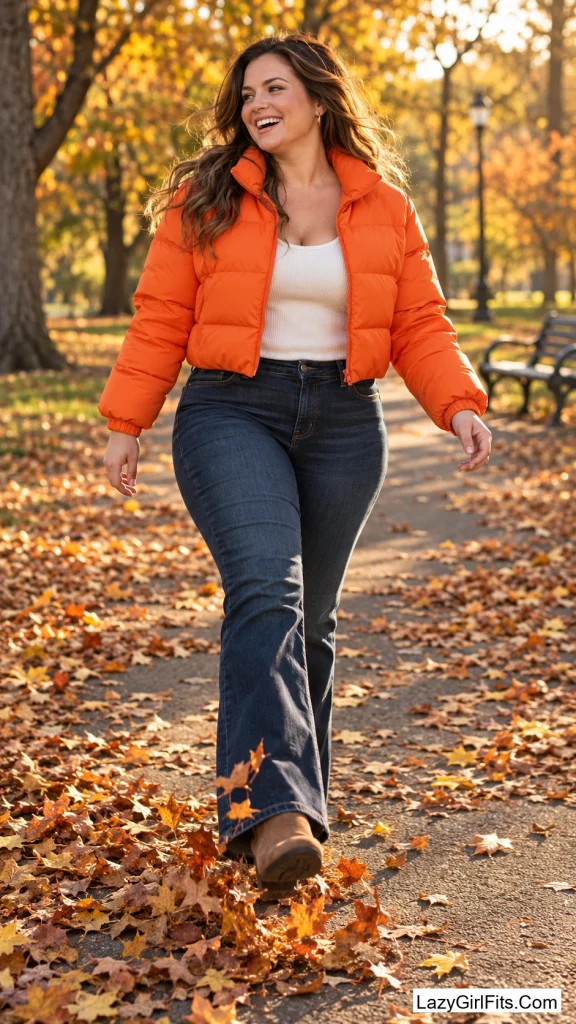
6. Dark Bootcut Jeans with a Cropped Puffer
Bootcut jeans in a dark, uniform wash are the reliable trouser stand-in for a pear shape, because the slight flare at the ankle balances hip width instead of exaggerating it the way a skinny leg does. A cropped puffer jacket, cut to hit at the natural waist, adds the shoulder bulk the jeans don’t need to carry.
Keep the puffer’s color loud if the jeans are dark — a bright puffer over dark denim is the same top-heavy strategy as a bright sweater, just built for colder days.
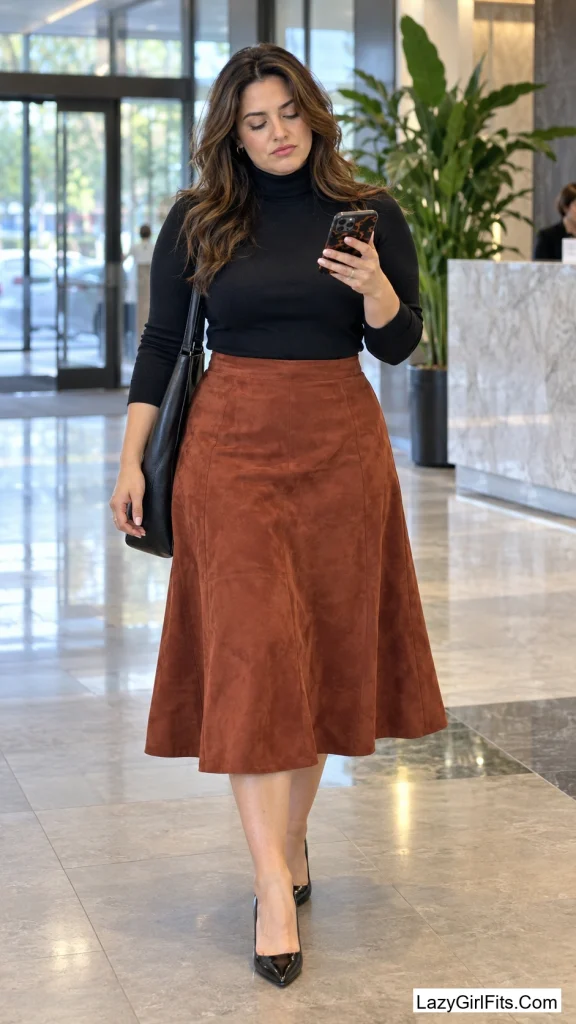
7. A-Line Midi Skirt in Rust Suede
An A-line cut skims out gently from the waist instead of clinging at the hip, and a midi length — hitting mid-calf — keeps the proportion balanced against ankle boots. Suede in a rust or burnt-orange tone reads as an everyday fall fabric rather than a special-occasion one.
The suede’s texture also does something a smooth fabric can’t: it catches light unevenly, which softens the line of the skirt rather than outlining the hip in a single clean edge the way a stiff satin would.
Tuck a fitted top in fully rather than half-tucking it — an A-line skirt already has movement built in, and a full tuck keeps the waistline from disappearing under a looser shirt.
Sweater Weather Layering
Fall gives a pear shape more excuses to build height and structure up top before the temperature ever asks for a coat.
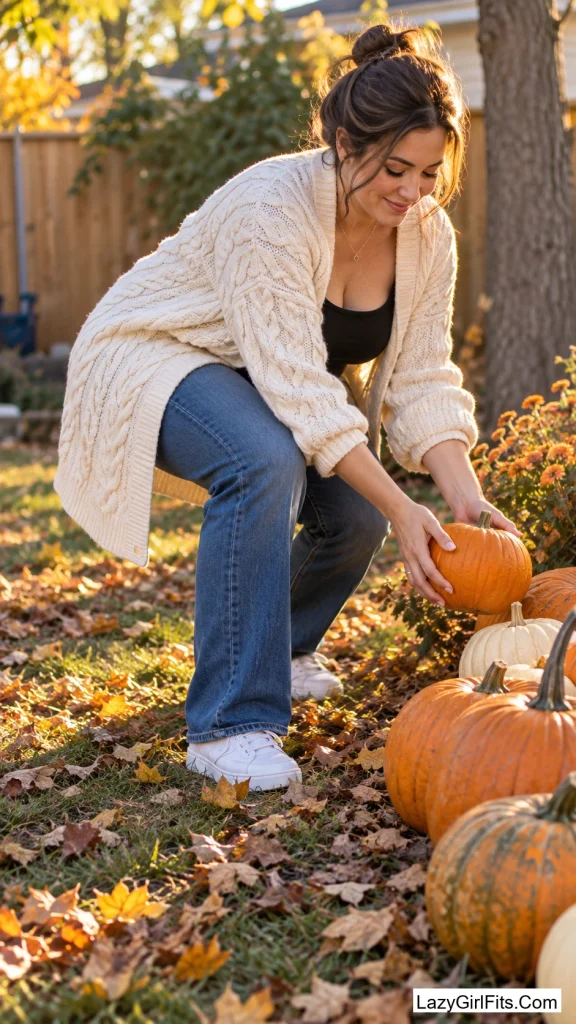
8. Cable-Knit Cardigan Worn Open Like a Jacket
An oversized cable-knit cardigan, left open rather than buttoned, functions as outerwear rather than a base layer — the cables add visible texture across the chest and shoulders, and the open front creates a long vertical line down the center of the body.
Wear it over a fitted layer, not another loose one, so the cardigan’s volume has something to contrast against. Two oversized pieces stacked together erase the waist the cardigan is otherwise drawing attention toward.
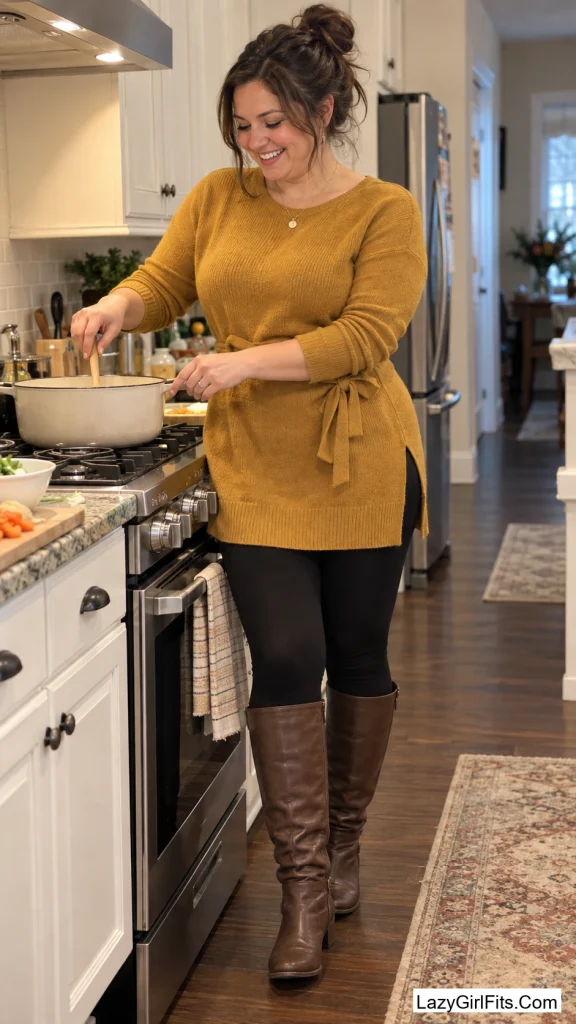
9. Tunic Sweater Over Leggings with Tall Boots
A tunic-length sweater that hits mid-thigh, paired with leggings and boots that come up to the knee, is the fall combination that asks the least of a wardrobe and still does the job — the sweater covers the widest part of the hip while the tall boot shaft keeps the leg line unbroken underneath.
Look for a tunic with some shape at the waist, even a simple side-tie or a slightly fitted rib panel, so the piece doesn’t read as a single rectangle from shoulder to thigh.
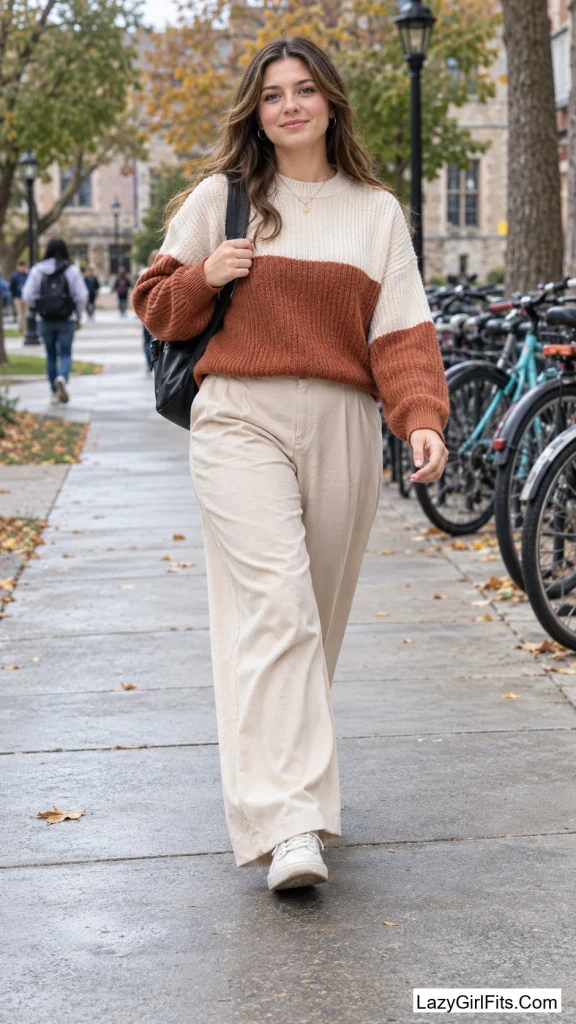
10. Colorblock Sweater with Neutral Wide-Leg Pants
A sweater split into two or three color blocks across the chest and shoulders adds visual complexity exactly where a pear shape wants it, without needing a print or an accessory to do the same job. Keep the pants in a single neutral tone so they recede against the sweater’s color changes.
The color-block seams also tend to sit at natural style lines — across the chest, down the center — which reinforces the vertical and horizontal lines already doing the work of balancing proportion.
If the color block includes a bright shade, put it at the top of the sweater rather than the bottom hem — the brightest color should sit closest to the face, not closest to the waistband.
Jackets and Coats That Balance the Frame
Outerwear is where a pear shape can add the most shoulder structure in a single piece, so it’s worth choosing on purpose rather than grabbing whatever’s on the hook.
11. Cropped Moto Jacket with Shoulder Hardware
A cropped moto jacket that hits right at the waist adds structure through the shoulder — especially with hardware like a buckled epaulette or a metal zip pull at the collar — without adding any length that would compete with a fuller hip below it.
Leave it unzipped over a fitted top so the jacket’s shoulder width reads clearly instead of collapsing into the silhouette of whatever’s underneath.

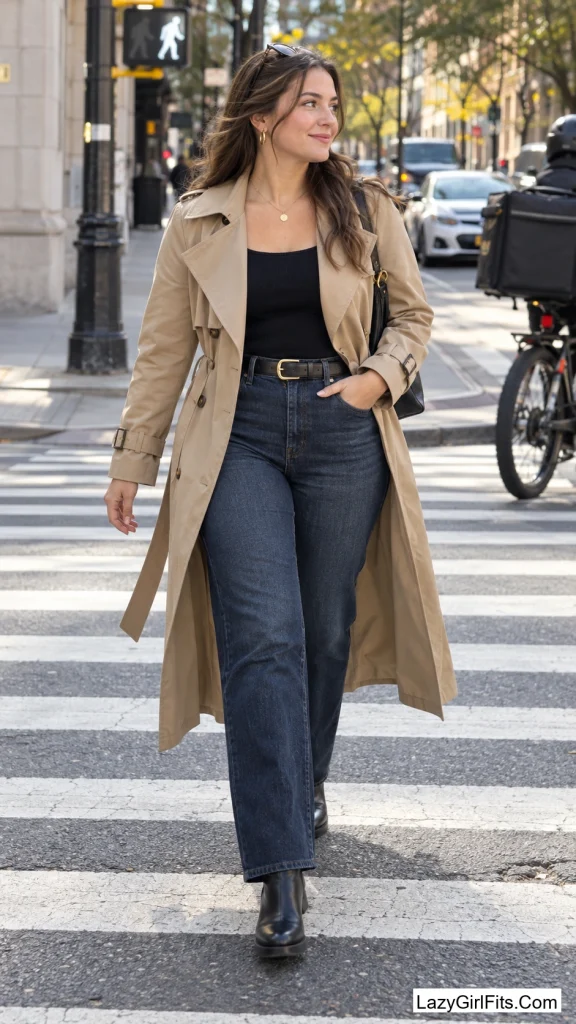
12. Trench Coat Belted High, Left Open Over Denim
A classic trench, belted at the natural waist and worn open rather than buttoned, gives structure through the collar and lapel while still marking where the waist actually sits. Wide lapels and a substantial collar add width at the shoulder the same way a blazer would.
Over dark, straight-leg denim, the coat’s open front creates one long vertical line down the middle of the outfit, which reads as taller and leaner than a fully buttoned coat would in the same fabric.
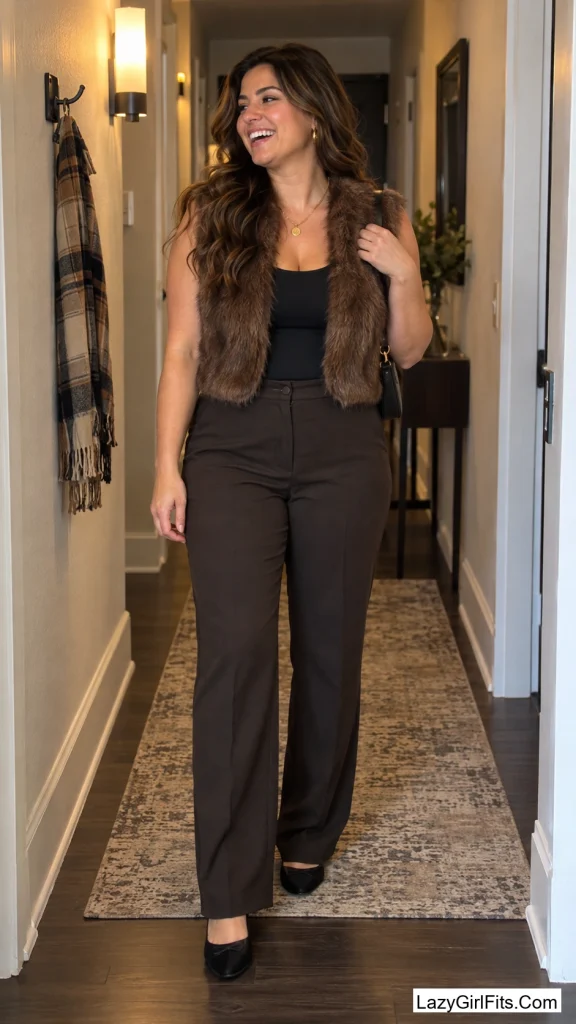
13. Cropped Faux-Fur Vest Over a Bodysuit
A cropped faux-fur vest, cut to end above the hip, adds texture and visible bulk to the shoulders and chest without any length that could bulk up the lower half. A fitted bodysuit underneath keeps the waistline defined instead of letting the vest’s volume spread downward.
Faux fur has a built-in advantage here: its texture reads as three-dimensional even in a still photo, so it draws the eye by contrast alone before color or pattern gets involved.
Pair it with a bottom that’s genuinely simple — a straight-leg trouser or a dark, clean-front jean — since the vest is already carrying more visual weight than most tops in a fall wardrobe.
Dresses That Do the Work for You
A dress solves the top-and-bottom balancing act in one piece, provided the cut and the waist placement are right for the shape underneath them.
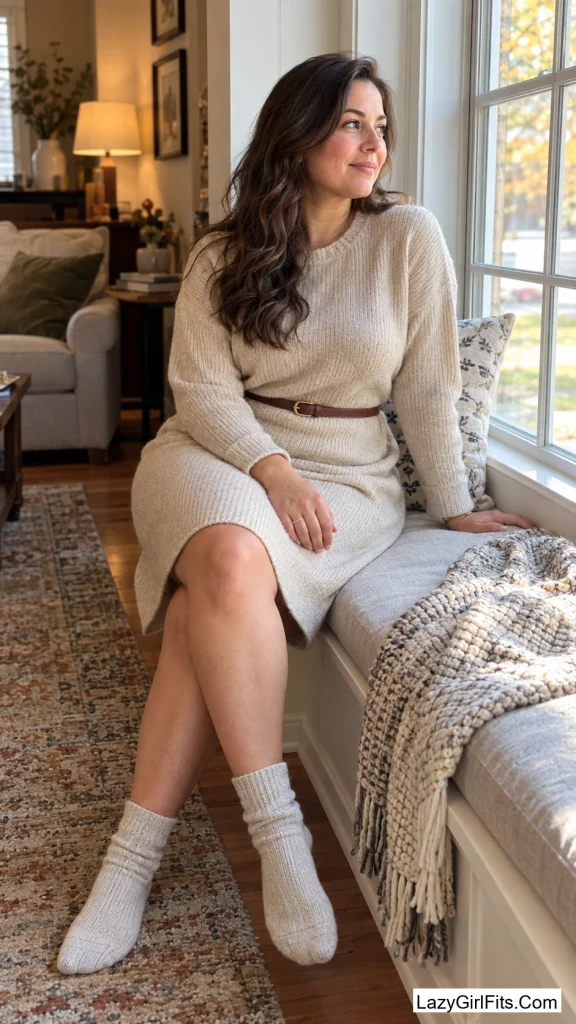
14. Sweater Dress Cinched at the Natural Waist
A sweater dress in a straight or slightly A-line cut, worn with a thin belt at the actual waist rather than higher or lower, marks the smallest part of the torso without needing a separate top and bottom. Knee-length keeps the hemline from adding extra visual width at the widest point of the thigh.
Choose a belt no wider than an inch or so — a thick belt at the waist on a soft knit fabric tends to bunch the material above and below it instead of creating one clean line.
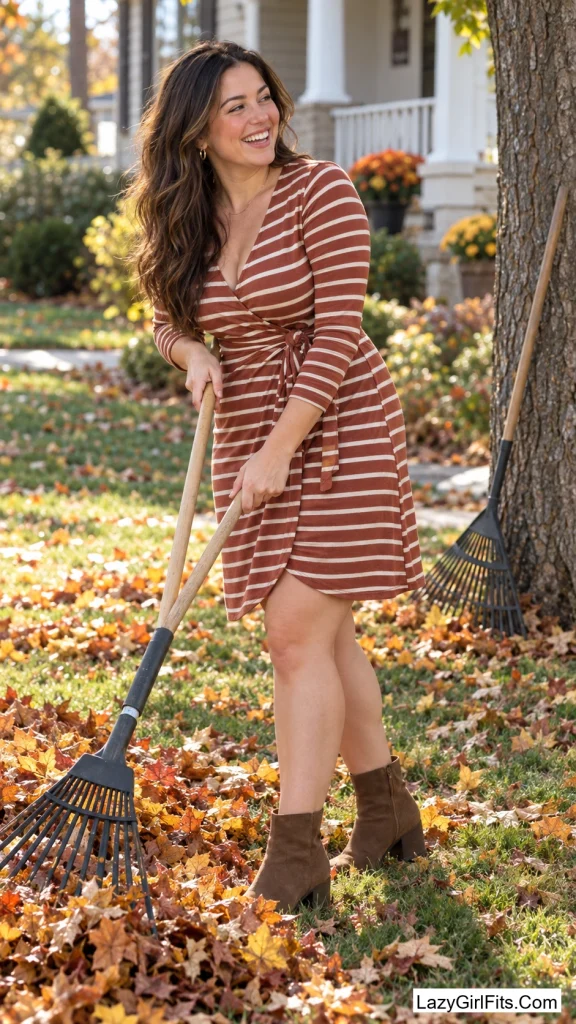
15. Wrap Dress in a Horizontal-Striped Knit
A wrap dress already does half the work of flattering a pear shape by crossing at the waist and creating a built-in V that narrows toward the center. A horizontal stripe across the bodice, above where the wrap crosses, adds width to the chest and shoulders to match the volume the wrap skirt naturally has below.
Keep the stripe confined to the top half of the dress — a striped skirt portion works against the wrap’s slimming cross instead of with it.
16. Flannel Shirt Dress Belted Over Opaque Tights
A flannel shirt dress, worn belted at the waist over opaque tights and ankle boots, turns a casual fabric into a full fall outfit without a separate skirt or pant. The collar and button placket already add shoulder and chest detail before the belt does anything.
Roll the sleeves to the elbow and leave the top button or two open — a shirt dress buttoned all the way to the collar with sleeves down tends to read as boxy rather than shaped, even with a belt at the waist.
Dark opaque tights keep the leg line unbroken from hem to boot, which matters more in a shirt dress than in a skirt because the hemline usually falls mid-thigh to knee, right at the widest point on a pear shape.

Prints and Texture Up Top
A pattern or a texture change is one of the fastest ways to add visual weight without adding actual bulk, and fall fabrics make it easy.
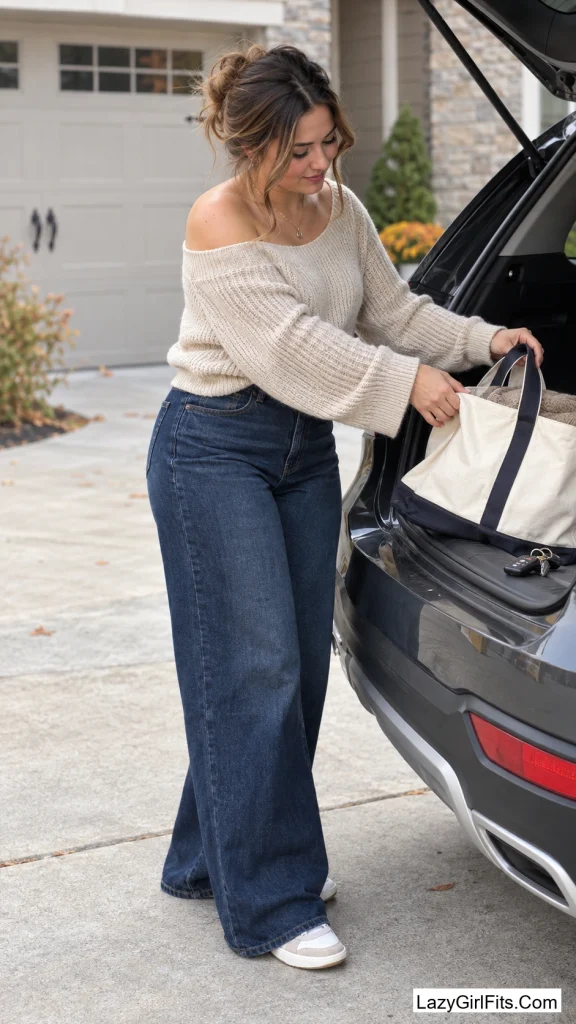
17. Off-Shoulder Knit with Wide-Leg Denim
An off-shoulder sweater exposes the collarbone and the top of the shoulder, which widens the visible frame of the upper body more than almost any other neckline. Wide-leg denim in a dark wash keeps the bottom half moving in the same loose, easy direction as the sweater instead of fighting it with a fitted leg.
A long pendant necklace layered under the off-shoulder neckline adds one more vertical line down the chest, which works with the horizontal width of the exposed shoulders rather than against it.
18. Peplum Top Tucked Into Straight-Leg Denim
A peplum top flares out from a fitted waistband, and that small flare sits high enough on the body — right at the ribs — that it reads as shoulder-and-bust structure rather than hip width. Straight-leg denim underneath keeps the rest of the silhouette clean.
The peplum works best in a slightly stiffer fabric — ponte knit or a structured cotton blend — since a soft, drapey peplum can lose its shape and start to look like an untucked shirt instead of a deliberate detail.
Keep any pattern on the peplum itself rather than the denim below it — the peplum’s job is to hold the eye at the waistline, and a patterned bottom pulls it right back down.
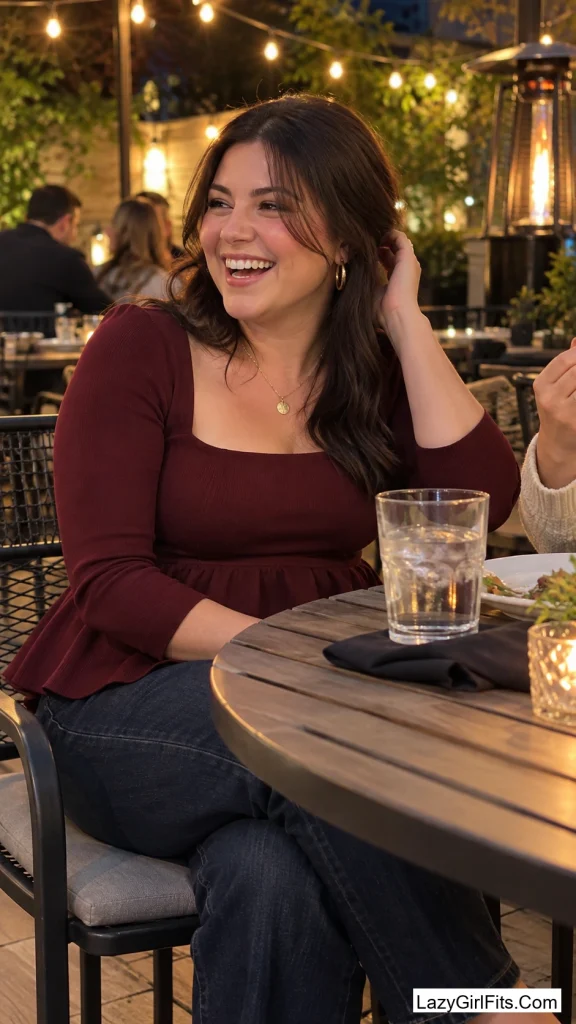
19. Statement Scarf Knotted Over a Plain Crewneck
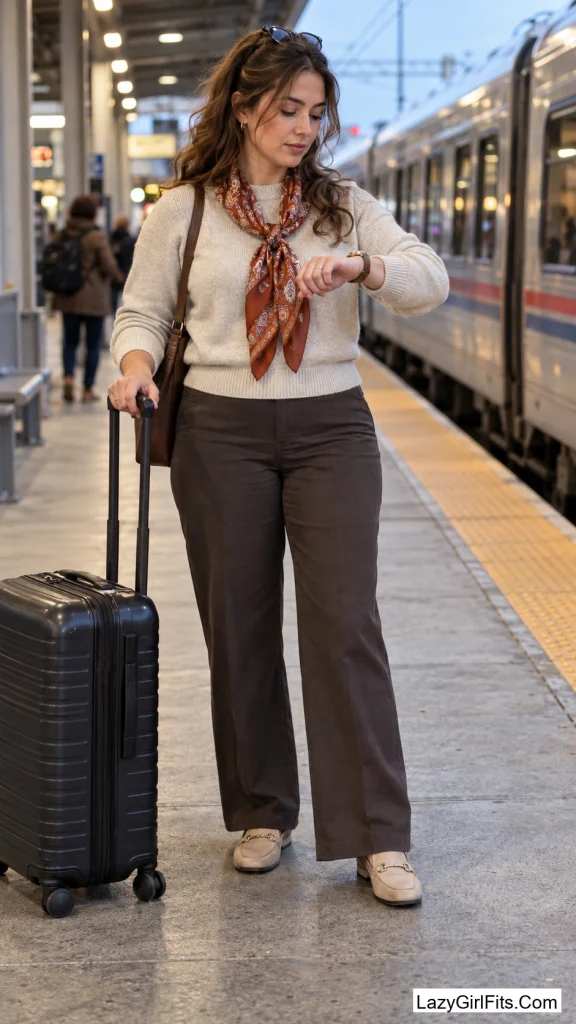
A silk or wool scarf, knotted loosely at the front of the neck over a plain crewneck sweater, adds pattern and color exactly at collarbone height without changing the sweater’s fit at all. It’s the fastest fix on this whole list for a sweater that otherwise reads as plain.
A scarf in a print with some orange, rust, or mustard tone ties naturally into a fall palette, and the knot itself — even a simple overhand — adds a small amount of dimensional bulk right where a pear shape benefits from it.
The Finishing Details
The last five minutes of getting dressed — shoes and a bag — still shift the proportion of the whole outfit.
20. Tall Block-Heel Boots to Lengthen the Leg Line
A block heel around two to three inches, paired with a boot shaft that hits just under the knee, lengthens the visible leg line more than a flat boot does, which matters most with any hemline that falls at the widest part of the thigh. The block heel also holds up better than a stiletto for the walking a fall day usually involves.
Match the boot’s color to the hem above it when possible — a dark boot under a dark skirt or trouser hem removes the visual break between the two and reads as one continuous line down to the floor.
Save the contrasting-color boot for outfits with a shorter hemline, where a break in color at the knee doesn’t interrupt as much visual length.

21. Structured Top-Handle Bag Worn at the Shoulder
A structured bag with a top handle, carried in the crook of the elbow or looped over one shoulder, sits at chest or hip height depending on the strap drop. Worn high, it adds one more shape near the upper body instead of at the hip, where a slouchy hobo bag would otherwise land.
Choose a bag in a color that contrasts with the outfit rather than matching it exactly — a bag that blends into a dark bottom disappears, while one that stands out becomes another point of interest working alongside the sweater or jacket above it.

Final Thoughts
None of these fixes require replacing an entire closet. A puff sleeve here, a thin belt there, or trading a skinny jean for a straight leg covers most of what a pear shape needs from a fall wardrobe.
Start with whichever category matches what’s already hanging in the closet, then build outward one piece at a time as the weather actually calls for it.