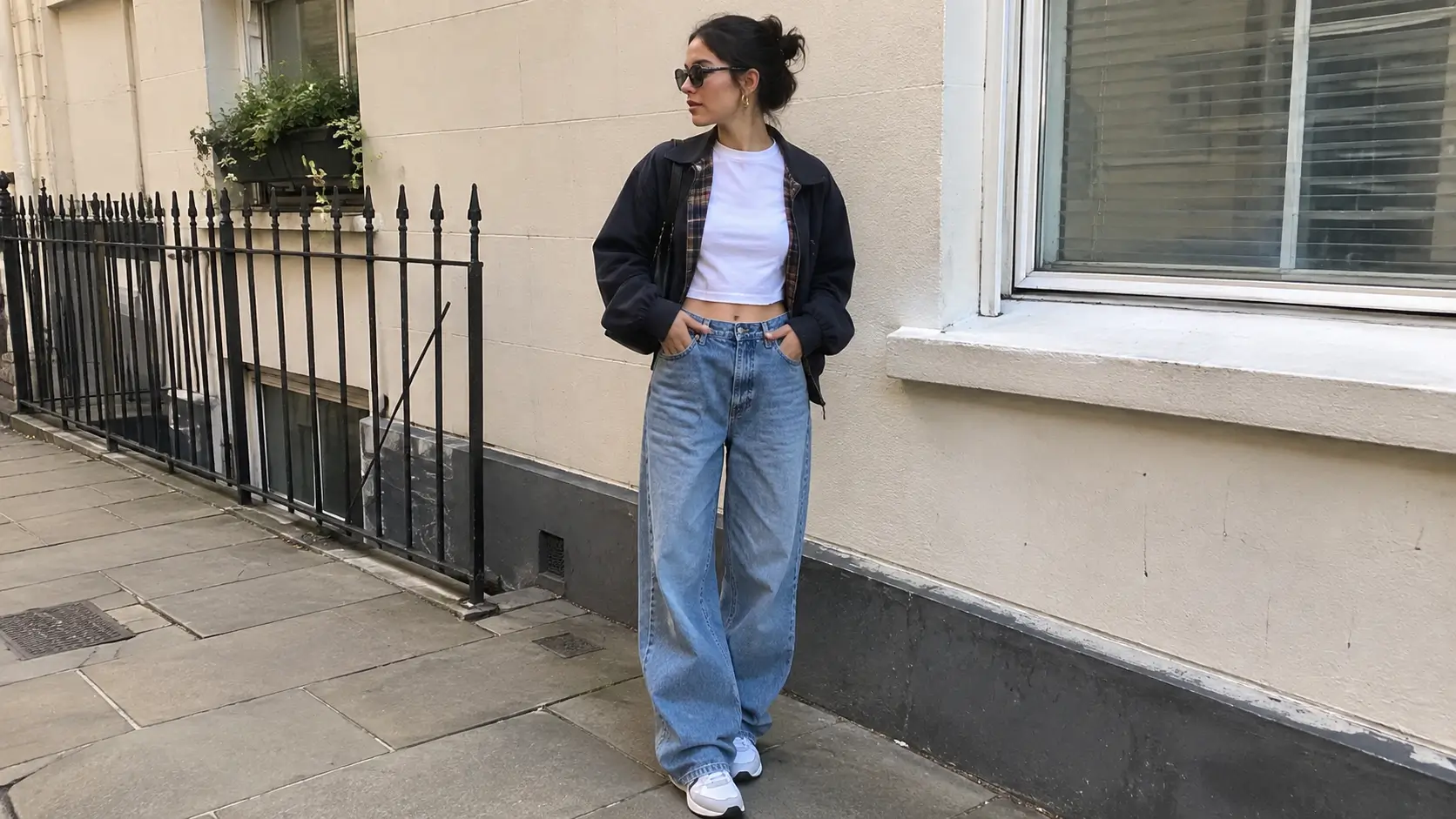
The 90s covered a lot of ground in ten years. The same decade produced a bias-cut slip dress under a strobe light and a flannel shirt knotted at the waist over ripped jeans, sometimes on the same person in the same week.
This list moves across that range on purpose — minimalist layering next to grunge next to plaid preppy sets — because a single 90s “look” was never really the point. Pull the pieces already sitting in a closet and treat the rest as a direction, not a costume.
A handful of these are the pairings everyone already associates with the decade. The rest are combinations that show up a lot less often, built from the same pieces.
Slip Dresses and Sheer Layers
The slip dress carried half the decade on its own, but it rarely worked alone. These three lean on what went underneath and around it.
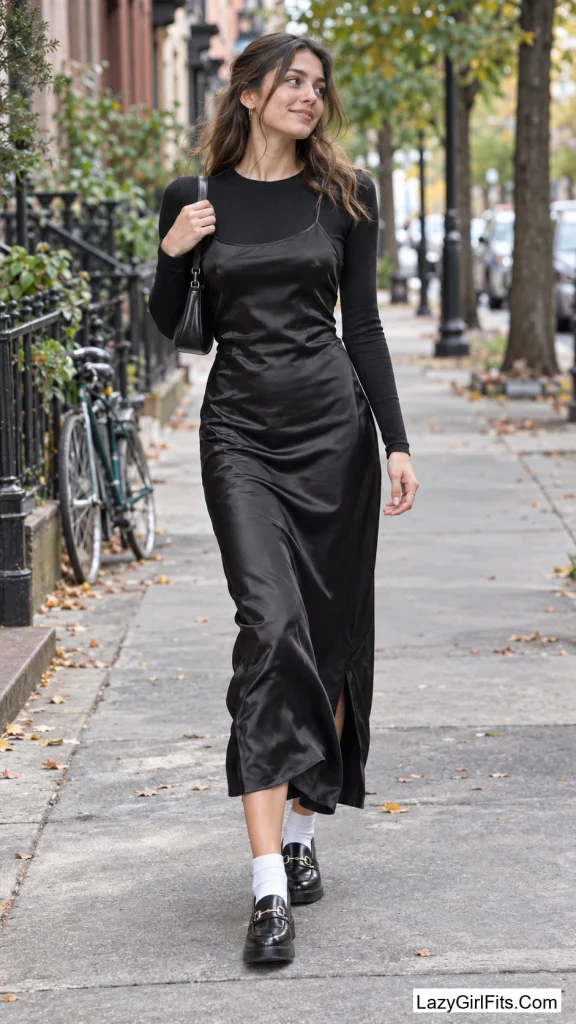
1. Slip Dress Over a Long-Sleeve Tee
A bias-cut satin slip in a solid color — black, deep green, or wine — worn over a fitted long-sleeve tee in a plain color that doesn’t fight the dress. The tee’s hem should sit just under the slip’s neckline so there’s no gap of bare skin at the collarbone.
The layering does two things at once: it takes the dress from evening-only to something you can wear to run errands, and it keeps you from freezing in a slip dress in October. A light rib or plain cotton tee both work; anything too thick will bunch under the dress.
2. Slip Skirt, Socks, and Platform Sandals
A satin slip skirt, cut on the bias so it moves when you walk, paired with plain white ankle socks and chunky platform sandals instead of the heels or flats most people reach for. The sock shows about an inch above the sandal strap.
It’s the sock-and-sandal pairing that keeps this from reading as a dressed-up going-out look — it drops the formality by a full notch and makes the slip skirt work as a daytime outfit instead. Keep the top simple, a fitted tank or plain tee, so the shoes stay the detail people notice.

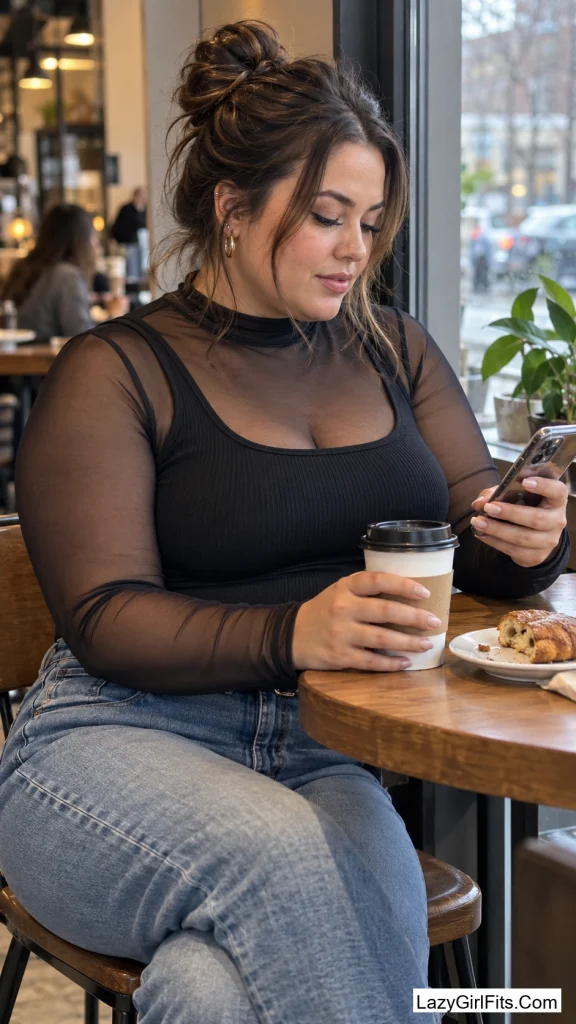
3. Mesh Long-Sleeve Under a Ribbed Tank
A sheer black mesh long-sleeve top worn underneath a fitted ribbed tank, so the mesh sleeves and a strip of shoulder show past the tank’s edges. Pair with straight-leg jeans or a slip skirt underneath — either holds up the same way.
This works because the mesh is doing almost nothing on its own — it’s covered by the tank across the torso — and that restraint is what keeps it from looking like a costume piece. The sleeves are the entire statement, and they only need to show from the shoulder to the wrist.
If the mesh top runs long, tuck the hem into the jeans rather than letting two hems compete at the waist. A single tucked-in layer reads cleaner in photos and in person.
Denim on Denim
Two pieces of denim in the same outfit only works with contrast — different washes, different weights, different shapes. These three handle it differently.
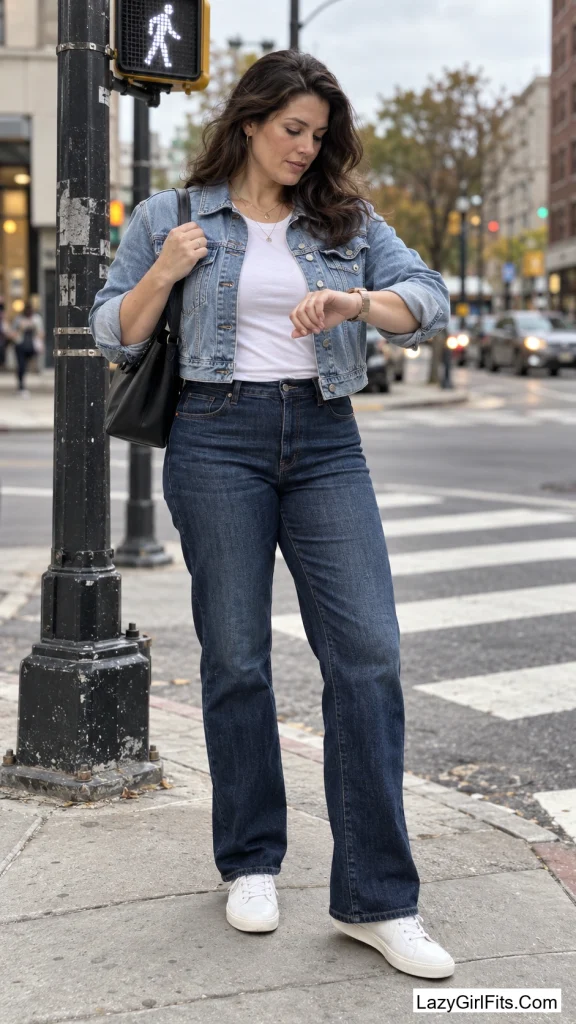
4. Denim Jacket Over Straight-Leg Jeans
A cropped or boxy denim jacket in a lighter wash than the jeans underneath, so the two pieces don’t blend into one slab of blue. Straight-leg jeans in a mid or dark wash, hemmed to break right at the ankle.
The wash contrast is the whole trick — matching denim tones read as a uniform, while a two- or three-shade gap between jacket and jeans reads as an outfit someone put together on purpose. A plain white or black tee underneath keeps the rest of the look quiet.
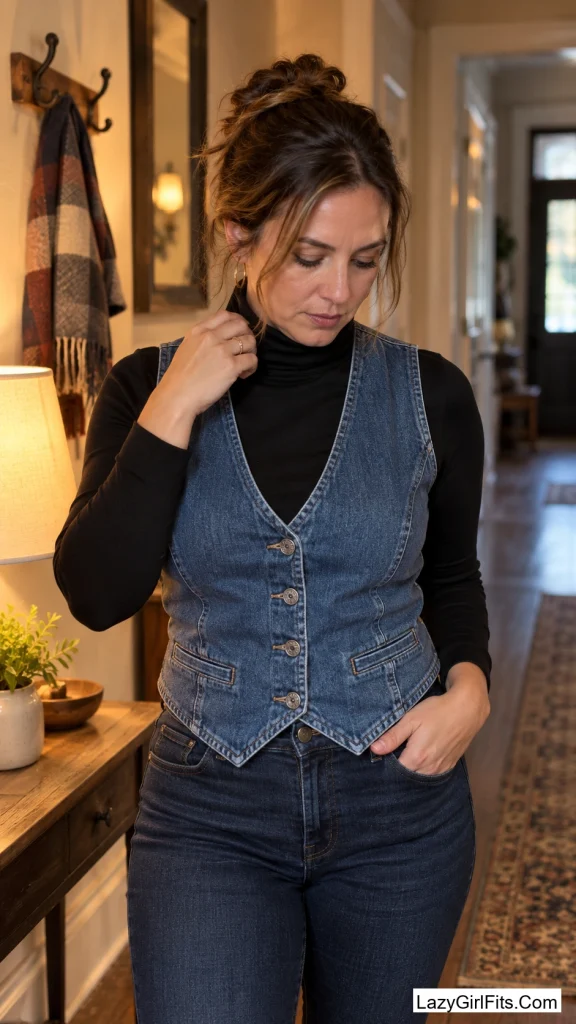
5. Denim Vest Over a Turtleneck
A sleeveless denim vest, buttoned most of the way up, worn directly over a fitted turtleneck instead of layered under a jacket. Straight-leg jeans in a different wash than the vest, so the denim-on-denim reads as intentional rather than a matched set.
Skipping the jacket is what makes this different from the standard denim-jacket pairing — the vest sits close to the body instead of adding bulk, and the turtleneck’s high neck fills the space a jacket collar would normally cover. It works especially well in weather too warm for a full jacket but too cool for bare arms.
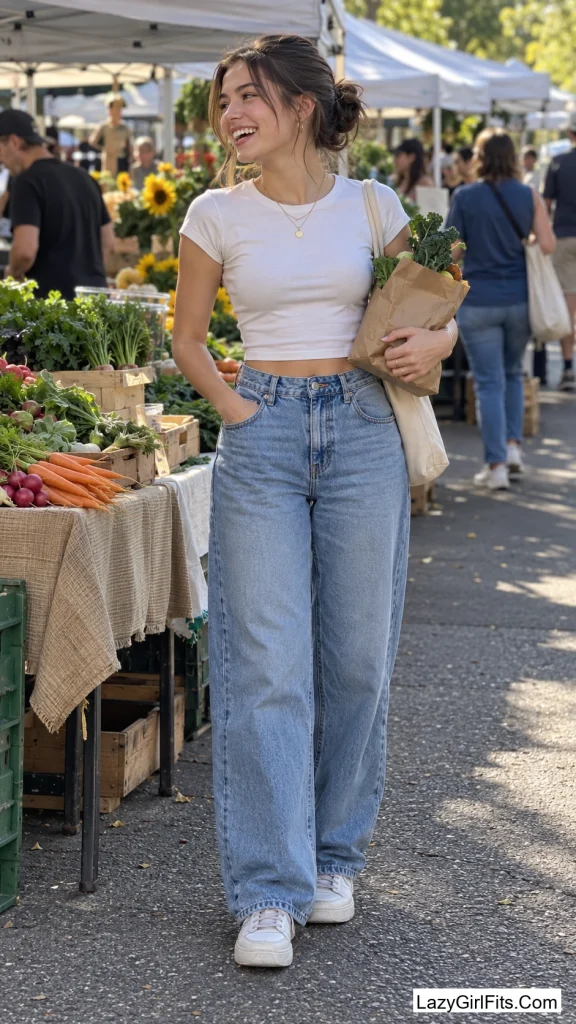
6. Baby Tee Tucked Into Dad Jeans
A cropped baby tee — the shorter, close-fitting kind, not an oversized graphic tee cropped by tying a knot — tucked fully into a pair of loose, high-waisted dad jeans. The jeans do all the volume; the tee stays fitted through the shoulders and torso.
The contrast is the point: one fitted piece, one loose piece, nothing in between. If both pieces are relaxed, the outfit loses its shape entirely and just reads as baggy. If both are fitted, it stops looking like the 90s and starts looking like a modern going-out top.
Sneakers keep this casual; a low block heel or chunky loafer dresses it up without changing anything else in the outfit. Either way, leave the tee untucked at exactly one point at the hip if the torso feels too structured — a small break in the tuck softens the line.
Cargo and Utility
Cargo pants carried the utility half of the decade almost single-handedly. The pocket detail does most of the visual work, so the rest of the outfit can stay simple.
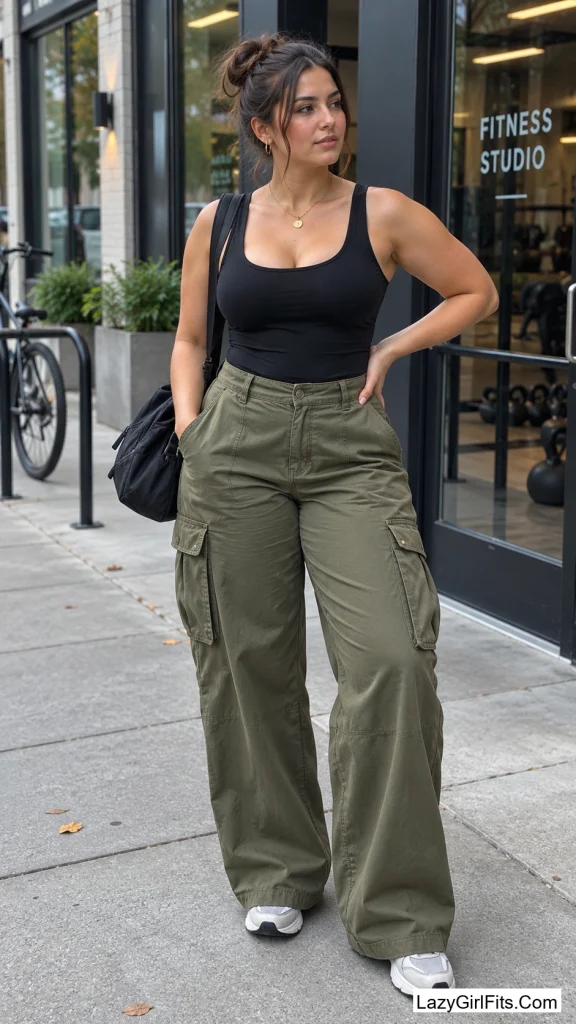
7. Cargo Pants with a Fitted Tank
Wide-leg cargo pants with the side pockets sitting at mid-thigh, paired with a plain fitted tank tucked in at the waist. Khaki, olive, or black all work; the pocket detail reads clearly against a solid color.
Keeping the top fitted and tucked balances the volume in the pants — a loose top over loose cargo pants loses the waist entirely and turns into one shapeless block. A thin belt at the waist, even a plain one, holds the proportion in place.
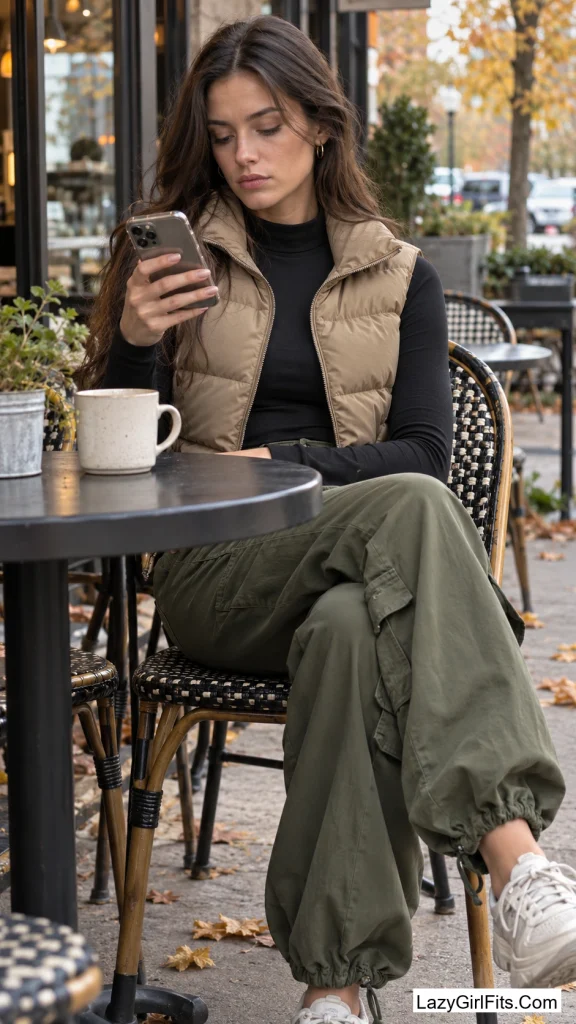
8. Cargo Pants and a Puffer Vest
The same wide-leg cargo pants, but cinched at the ankle with the built-in drawstring or a fabric tie, worn with a cropped puffer vest over a long-sleeve base layer. The ankle cinch is what changes the silhouette — it turns the pants from straight-leg utility into something closer to a parachute shape.
The puffer vest adds bulk on top without adding sleeves, which keeps the arms free to show the base layer’s cuffs. It’s a cold-weather pairing that still reads as a single outfit rather than two seasons stacked on top of each other.
9. Bike Shorts Under a Men’s Shirt
Waist-high bike shorts, worn as the only bottom, under an oversized men’s button-down dress shirt left mostly unbuttoned or buttoned only at the waist. The shirt’s hem should hit somewhere between mid-thigh and just above the knee.
This pairing works because the bike shorts do the coverage and the shirt does the shape — a men’s dress shirt has enough structure in the shoulders and collar to keep the outfit from reading as underwear-plus-cardigan, which is the risk with bike shorts under anything too soft.
Roll the shirt cuffs once or twice rather than leaving them long; a rolled cuff reads as deliberate, while a long sleeve flapping past the wrist reads as borrowed and forgotten. Chunky sneakers or combat boots ground the look; anything delicate fights the shirt’s boxiness.

Grunge Layers
Grunge worked by piling on textures that shouldn’t have matched and letting them not match anyway. These three keep that same friction.
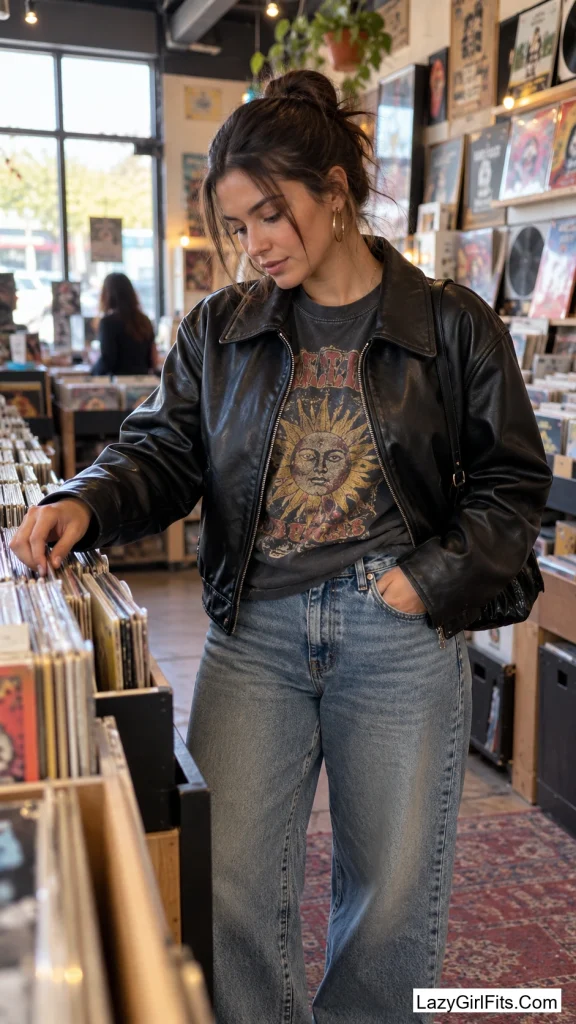
10. Leather Jacket Over a Graphic Tee
A boxy leather jacket, worn open, over a faded or well-worn graphic tee — band merch, a thrifted logo tee, anything with some wear already in the fabric. Straight or slightly loose jeans underneath, no cargo or flare needed.
The jacket’s structure is what carries this outfit; everything under it can be soft and worn-in without the whole look losing shape. A newer, stiffer leather jacket works fine, but one that’s already broken in at the elbows sits closer to how this pairing actually looked the first time around.
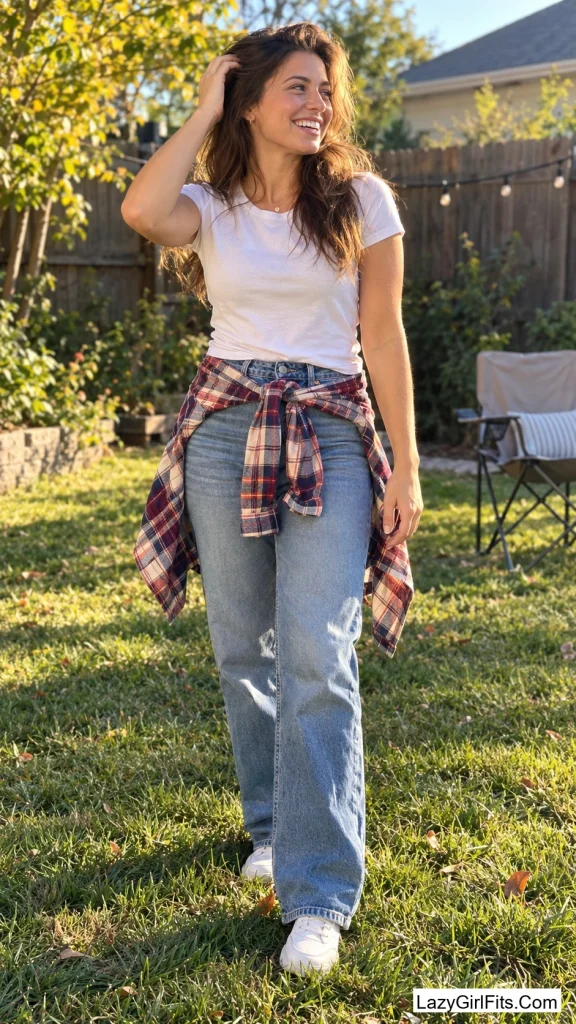
11. Plaid Flannel Tied at the Waist
An oversized plaid flannel shirt, sleeves rolled or left long, tied by the sleeves around the waist over a plain or graphic tee and jeans. The flannel isn’t worn as a shirt here — it’s an accessory around the hips, adding a block of pattern at the waist.
Tying it at the waist instead of wearing it open does two things: it breaks up a plain tee-and-jeans outfit without adding bulk on top, and it gives you somewhere to put the flannel once it’s too warm to wear as a layer. Any plaid works, but a slightly oversized shirt ties more easily than a fitted one.
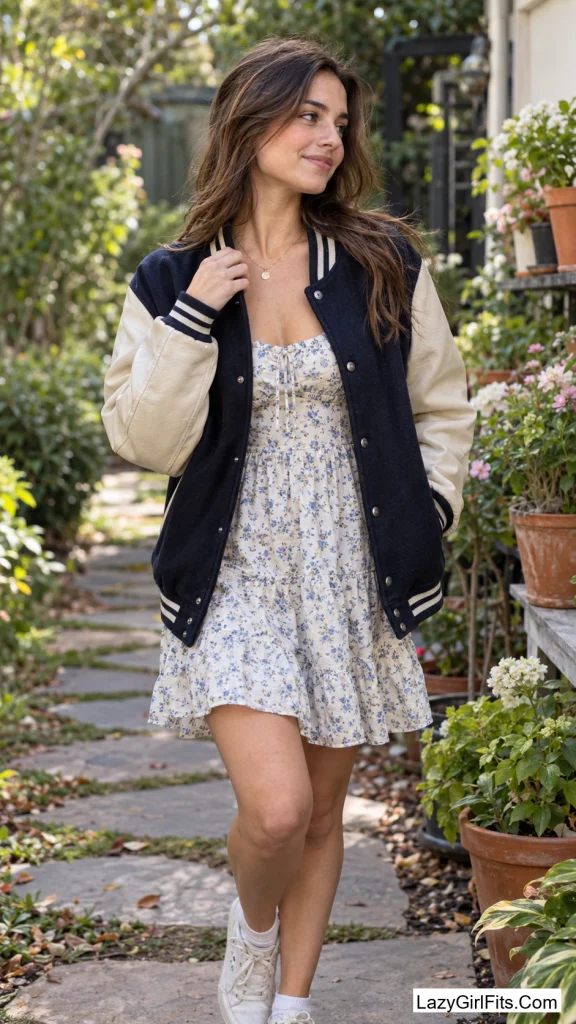
12. Varsity Jacket Over a Sundress
A men’s varsity jacket, wool body with leather sleeves if you can find one, worn open over a floral or plain cotton sundress instead of a denim jacket or cardigan. The jacket stays unzipped the whole time; zipping it changes the silhouette entirely and buries the dress.
The combination works on contrast — a masculine, boxy jacket over a soft, feminine dress — and it’s a pairing that shows up far less than the expected denim-jacket-over-sundress. The jacket’s ribbed cuffs and collar are doing a lot of the visual work, so a jacket without those details won’t read the same way.
This one runs better in transitional weather, spring or early fall, since the dress alone is too light for real cold and the jacket alone is too warm without it. Sneakers keep it casual; the jacket already has enough personality that the shoes don’t need to add more.
Preppy and Tailored
The same decade that gave us grunge also gave us plaid mini skirts and minimalist tailoring, sometimes from the same closet. These three stay on the cleaner end.
13. Turtleneck and Plaid Mini Skirt
A fitted turtleneck, tucked in, with a pleated plaid mini skirt sitting at or just above the knee. Black tights and knee-high boots underneath in colder weather; bare legs and loafers in warmer months.
The turtleneck’s high neck and the skirt’s short hem balance each other — covered on top, shorter on the bottom — which is why this pairing reads as put-together rather than mismatched. Keep the palette to two colors at most so the plaid stays the focal point.

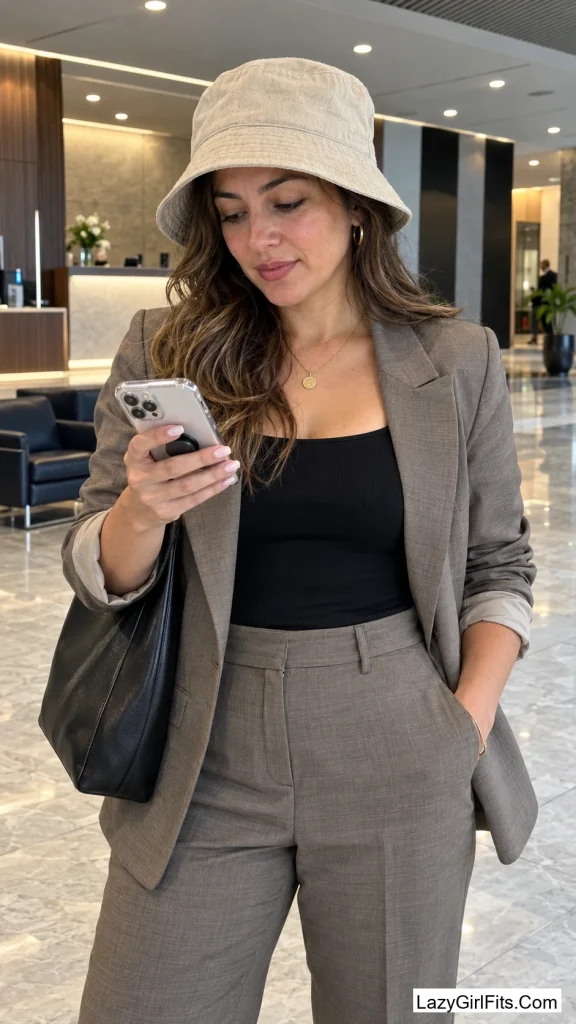
14. Bucket Hat with Tailored Trousers
A plain canvas or corduroy bucket hat, usually paired with sneakers and joggers, worn instead with a fitted blazer and straight-leg tailored trousers. The hat stays the same casual piece; everything under it moves formal.
The mismatch is deliberate — a bucket hat on top of tailoring reads as someone who owns both wardrobes rather than someone dressed for one occasion. It works best with trousers that are genuinely tailored, not just dark and straight-leg, since the hat needs real structure underneath to play against.
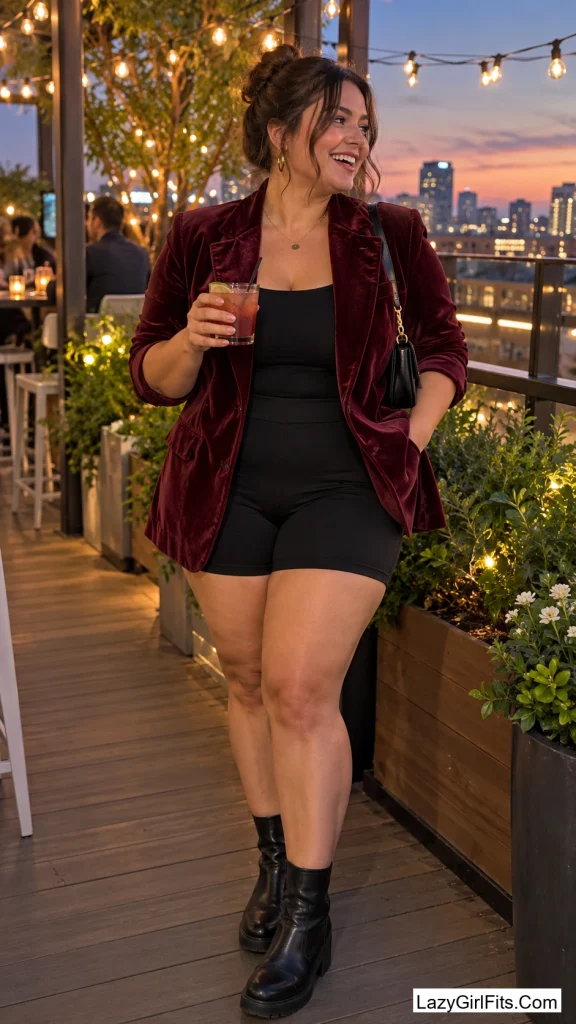
15. Velvet Blazer Over Bike Shorts
A single-breasted velvet blazer in a deep jewel tone — burgundy, emerald, navy — sleeves pushed up to the forearm, worn over black bike shorts and a simple fitted top. No shirt underneath the blazer besides the top; the velvet is doing the dressing-up on its own.
Pushing the sleeves up instead of wearing them long is what keeps this from looking like a suit jacket someone forgot to finish dressing around. It shows a bit of forearm, breaks up the velvet’s formality, and matches the bike shorts’ more casual register underneath.
Heeled sandals or a low block heel finish this one better than sneakers do — the blazer is already carrying enough dressed-down weight from the bike shorts that the shoes can afford to lean the other way. Keep jewelry minimal; the velvet’s texture is the accessory.
Off-Duty and Athletic
Not every 90s outfit was built to be looked at. These three come from the side of the decade that just wanted to be comfortable.
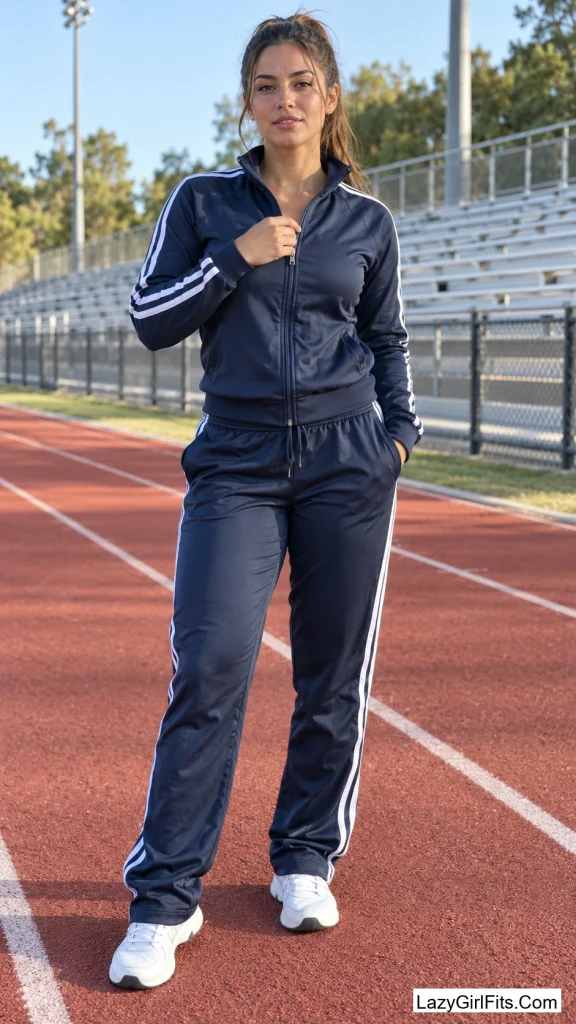
16. Track Jacket and Matching Track Pants
A zip-up track jacket with contrast stripes down the sleeves, paired with the matching track pants rather than mixed with jeans or a skirt. One solid base color — navy, black, or maroon — with the stripe as the only pattern.
Wearing the full matching set instead of splitting the pieces is what makes this read as a deliberate outfit rather than gym clothes worn outside the gym. Chunky sneakers finish it; anything sleeker undercuts the whole point of wearing a track suit.
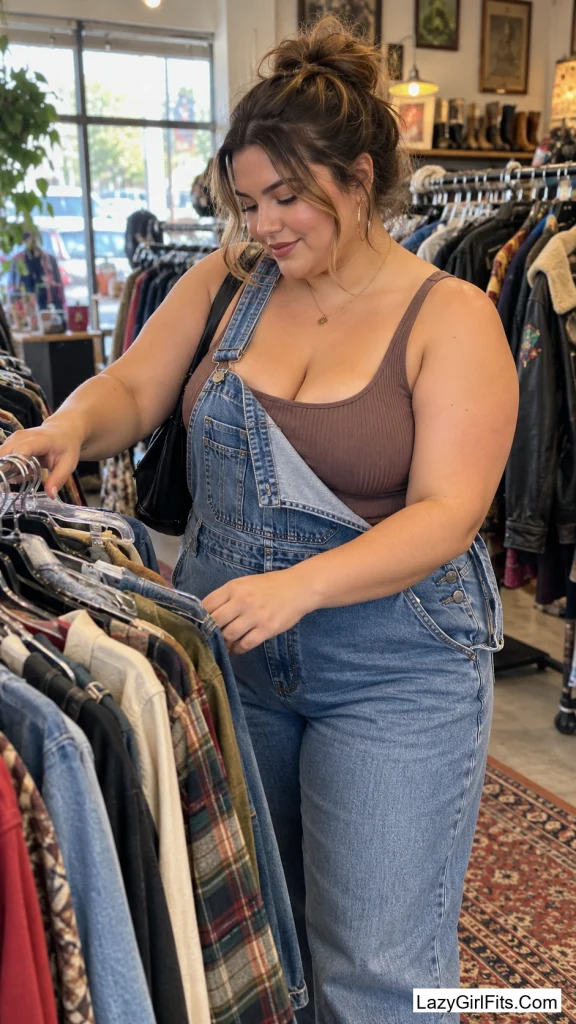
17. Bodysuit Under Overalls, One Strap Down
A fitted ribbed bodysuit, long or short sleeve, worn under a pair of denim or corduroy overalls with one strap deliberately left unclipped and hanging at the side. The bodysuit’s fabric shows at the shoulder where the strap would normally sit.
The undone strap is a small detail, but it’s the one that keeps the overalls from looking like a costume — clipped on both sides, overalls read as workwear or kidswear; one strap down reads as someone who put the outfit together and stopped caring about the rules halfway through. Roll the overall cuffs once for the same reason.
18. Chunky Loafers with a Floral Midi
A floral midi skirt — the kind more associated with a soft, feminine outfit — paired with chunky platform loafers and thick ribbed socks pulled up over the ankle instead of ballet flats or sandals. A simple fitted tee or turtleneck on top, tucked in.
The loafer-and-sock combination is borrowed from the grunge side of the decade, and putting it under a floral skirt is the inversion that makes this stand out — most floral-skirt outfits reach for something dainty on the feet instead. The chunkier the shoe, the more the contrast works; a delicate loafer won’t do the same job.
This pairs especially well in fall, when the socks are doing real warmth work rather than just decoration. If the skirt has a lot of movement in the fabric, a slightly higher sock keeps the leg from looking bare between the hem and the shoe.

Accessory-Led Looks
Sometimes the whole outfit is one accessory and everything else stays out of its way. These three build around that idea.
19. Claw Clip on a White Tee
A plain white tee, straight-leg jeans, sneakers — nothing else doing any visual work except one large claw clip holding a half-up ponytail at the crown. No jewelry, no pattern, no second accessory competing with it.
The point of this one is restraint rather than addition. A claw clip gets lost in an outfit that already has a lot going on, but against a completely plain base it becomes the entire focal point, which is closer to how the accessory actually functioned the first time around.

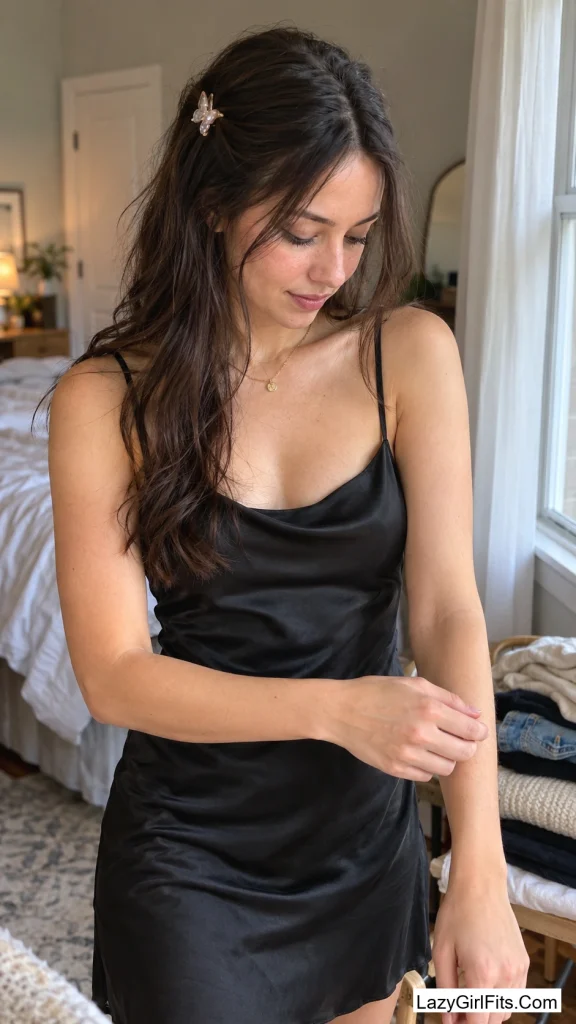
20. One Butterfly Clip, Hair Down
Hair left down and loose, with just one small butterfly clip pinning back a section on one side only — not a full head of clips, not a symmetrical part. Pair with a simple slip dress or plain top so the asymmetry in the hair is the thing that reads as intentional.
One clip instead of a dozen scattered through the hair keeps this from tipping into costume territory, which is the risk with butterfly clips specifically. The asymmetry — one side pinned, one side loose — is what separates it from a straightforward half-up style.
21. Corset Top Worn Backward
A lace-up corset top, laces facing front instead of back, worn over a fitted ribbed long-sleeve top and straight-leg jeans. Turning the lacing to the front changes it from an under-layer into the actual top half of the outfit.
Corset tops are usually worn with the laces at the back, closer to how they’d sit under other clothes, but front-facing laces put the detail where it actually shows instead of hidden against the spine. The long-sleeve underneath keeps the arms covered, which shifts the whole thing toward daytime instead of the going-out version most people picture.
Loosen the top two laces slightly rather than lacing the whole thing tight — a corset top laced all the way to the top edge starts to look like structured outerwear instead of a top with some give in it. Straight-leg jeans keep the bottom half quiet so the front lacing stays the focal point.

Final Thoughts
None of these need to be recreated exactly. The decade’s own closets weren’t that disciplined — a slip dress showed up next to combat boots as often as it showed up next to heels, and nobody was matching washes of denim on purpose the first time around either.
Pick two or three from this list that use pieces already sitting in a closet, and treat the rest as a direction rather than a shopping list.